GEO (Generative Engine Optimization) and AEO (Answer Engine Optimization) are the disciplines of earning citations inside AI-generated answers — the mention ChatGPT, Perplexity, or an AI Overview gives your site when it answers a question your content covers. This hub holds all 35 guides on the subject: what GEO and AEO actually mean, the ranking factors behind citations, how to structure content so language models can retrieve and quote it, and the entity work that makes AI systems recognize you as a source worth naming. Start with the fundamentals if the acronyms are new, or jump straight to the playbooks and checklists below.
- 35In-depth guides
- Jul 17, 2026Last updated
- 5 minAvg. read time
- FreeNo paywall, ever
Featured guides
 FundamentalsGenerative Engine Optimization ExplainedGenerative Engine Optimization (GEO) explained: what it is, how it differs from SEO and AEO, the six core techniques, and how to measure…6 min read · Updated Jul 5, 2026Read guide →FundamentalsAnswer Engine Optimization (AEO)A 2026 guide to answer engine optimization (AEO) — what it means, how it differs from SEO and GEO, and how to optimize content to be the…8 min read · Updated Jul 6, 2026Read guide →
 PlaybooksGEO ChecklistThe complete GEO checklist: access, passage, entity, authority, and measurement checks organized as a runnable audit for generative…5 min read · Updated Jul 5, 2026Read guide →
 Entities & RetrievalEntity SEOEntity SEO explained: how to make your brand, people, and topics unambiguously identifiable so search engines and AI systems can trust —…5 min read · Updated Jul 5, 2026Read guide →
Every GEO / AEO article
No articles match — try another term or pick a different topic chip.
 Entities & RetrievalAI Citation OptimizationAI citation optimization tactics: the passage patterns, citable anchors, and provenance signals that convert being read into being…5 min read · Updated Jul 5, 2026Read guide →
 Content & StructureAI Content FormattingAI content formatting: the headings, lists, tables, emphasis, and answer blocks that help models parse, extract, and cite your content…5 min read · Updated Jul 5, 2026Read guide →
 PlaybooksAI Overview OptimizationAI Overview optimization: how Google selects Overview citations, which queries trigger them, and the playbook for earning placement…5 min read · Updated Jul 5, 2026Read guide →FundamentalsAnswer Engine Optimization (AEO)A 2026 guide to answer engine optimization (AEO) — what it means, how it differs from SEO and GEO, and how to optimize content to be the…8 min read · Updated Jul 6, 2026Read guide →
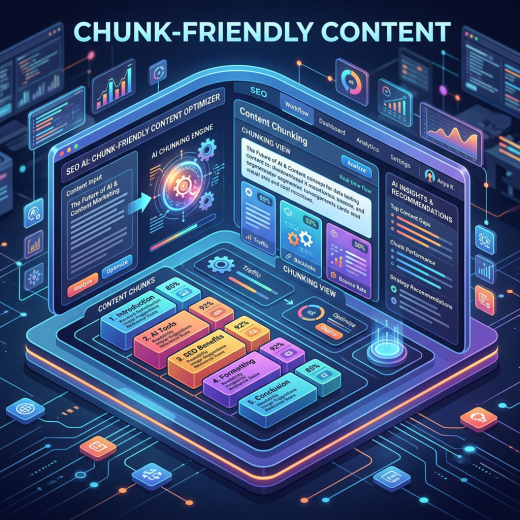 Content & StructureChunk-Friendly ContentChunk-friendly content explained: how AI systems split pages into passages, why chunk boundaries decide citations, and the writing rules…5 min read · Updated Jul 5, 2026Read guide →
 Entities & RetrievalEntity SEOEntity SEO explained: how to make your brand, people, and topics unambiguously identifiable so search engines and AI systems can trust —…5 min read · Updated Jul 5, 2026Read guide →
 FundamentalsFuture of GEOThe future of Generative Engine Optimization: how GEO evolves as agents, licensing, personalization, and answer commerce mature — and…5 min read · Updated Jul 5, 2026Read guide →
 FundamentalsGenerative Engine Optimization ExplainedGenerative Engine Optimization (GEO) explained: what it is, how it differs from SEO and AEO, the six core techniques, and how to measure…6 min read · Updated Jul 5, 2026Read guide →FundamentalsGEO and AEO: The Complete GuideThe complete GEO and AEO guide for 2026: how AI engines pick sources, the answer-first playbook, crawler access, llms.txt, and how to…6 min read · Updated Jul 11, 2026Read guide →
 PlaybooksGEO ChecklistThe complete GEO checklist: access, passage, entity, authority, and measurement checks organized as a runnable audit for generative…5 min read · Updated Jul 5, 2026Read guide →
 FundamentalsGEO Ranking FactorsThe GEO ranking factors that decide which sources generative engines cite — grouped into access, passage, entity, and authority layers…5 min read · Updated Jul 5, 2026Read guide →FundamentalsGEO vs SEO vs AEO: What’s the Difference?GEO vs SEO vs AEO explained: how generative engine, search engine, and answer engine optimization differ, where they overlap, and which…7 min read · Updated Jul 10, 2026Read guide →
 Entities & RetrievalKnowledge Graph OptimizationKnowledge graph optimization: the concrete program for getting your brand recognized in Google’s Knowledge Graph and the entity systems…5 min read · Updated Jul 5, 2026Read guide →
 Content & StructureLLM Content StrategyAn LLM content strategy: planning content for machine readers — cluster design, format selection, and editorial standards that win…5 min read · Updated Jul 5, 2026Read guide →
 Content & StructureLLM-Friendly Website StructureLLM-friendly website structure: the architecture, templates, and technical choices that make an entire site easy for AI systems to…5 min read · Updated Jul 5, 2026Read guide →Playbooksllms.txt GuideA clear-eyed llms.txt guide for 2026 — what the proposed standard is, how it works, what evidence exists for its impact, and whether you…8 min read · Updated Jul 6, 2026Read guide →Fundamentalsllms.txt vs robots.txt vs XML Sitemap: What Each File Doesllms.txt vs robots.txt vs XML sitemap — what each file controls, how search and AI crawlers use them, and the right setup order…6 min read · Updated Jul 12, 2026Read guide →
 PlaybooksPrompt Engineering for SEOPrompt engineering for SEO workflows: reliable prompt patterns for research, briefs, optimization, schema, and audits — plus the…5 min read · Updated Jul 5, 2026Read guide →
 Entities & RetrievalRetrieval OptimizationRetrieval optimization for AI search: how to win the fan-out sub-queries, embedding matches, and index lookups that decide whether…5 min read · Updated Jul 5, 2026Read guide →
 Content & StructureSemantic SEO for AISemantic SEO for AI systems: optimizing for meaning — topic coverage, entity relationships, and context — so models match your content…5 min read · Updated Jul 5, 2026Read guide →AI OverviewsAI Overviews Monitoring Tools ComparedProfound, Peec AI, Otterly, and Rankscale compared on price, coverage, and who each is built for.10 min read · Updated Jul 18, 2026Read guide →
Generative Engine Optimization (GEO) & Answer Engine Optimization (AEO): The Ultimate Guide
Generative Engine Optimization (GEO) is the discipline of making content that AI systems can confidently understand, retrieve, and cite. It’s narrower than AI SEO (which covers all AI search systems) but deeper in focus: GEO optimizes specifically for being selected as source material inside synthesized AI-generated answers.
Answer Engine Optimization (AEO) is related but distinct — it’s specifically about making your content the answer that answer engines deliver. Where GEO is about retrieval and citation, AEO is about being the source of truth the AI chooses to cite.
This guide covers how GEO and AEO work, the key differences between them and traditional SEO, ranking factors specific to AI citation, practical optimization techniques, and a checklist you can run against your own content today.
Quick Navigation
- What is GEO/AEO?
- How GEO Works
- Why It Matters
- GEO/AEO vs Traditional SEO
- Key Ranking Factors
- Practical Techniques
- Platform Optimization
- Myths Debunked
- GEO Checklist
- Getting Started
- Frequently Asked Questions
- Explore this cluster
What is GEO/AEO?
Generative Engine Optimization optimizes content for retrieval and citation by AI systems. Traditional SEO asks: “How do I rank this page?” GEO asks: “How do I make this page retrievable and cite-able by an AI that’s synthesizing an answer from multiple sources?”
Answer Engine Optimization is more specific. It asks: “How do I make my content the definitive answer that an AI chooses to cite?” AEO is about being selected; GEO is about being retrievable and trustworthy once selected.
The Three Pillars of GEO
- Retrievability: Can AI systems find and extract your content? This requires semantic clarity, proper chunking, and direct answers.
- Entity Clarity: Does the AI know who you are and whether you’re authoritative on this topic? Requires schema markup and consistent naming.
- Citation-Worthiness: Will the AI choose to cite you over competitors? Requires primary research, accuracy, and unique perspective.
How GEO Works: Retrieval, Chunking, Selection, Citation
1. Retrieval
AI systems retrieve candidate documents from search indices using semantic similarity. They’re not looking for exact keyword matches; they’re looking for topically relevant pages.
2. Chunking
Retrieved pages are split into chunks (passages, sections). AI systems process these chunks independently, so poorly structured content may not survive this stage. See Chunk-Friendly Content.
3. Selection
The system selects chunks that best answer the query, evaluating relevance, credibility, freshness, and specificity. This is where entity signals matter.
4. Citation
Selected content is cited in the AI’s synthesized answer. Your job is to be selected in step 3 — once selected, citation happens automatically.
Why GEO/AEO Matters
Answer engines are replacing search results. ChatGPT, Perplexity, and Google AI Overviews now handle a growing share of information-seeking queries. If your content isn’t optimized for retrieval and citation, you’re losing visibility to a high-intent audience.
GEO differs from traditional SEO in one critical way: zero-click is not a loss, it’s a win. Being cited in an AI answer — even without a click — builds brand authority and trust. See Zero-Click AI Search for how to measure this.
GEO/AEO vs Traditional SEO vs AI SEO
| Traditional SEO | AI SEO | GEO/AEO | |
|---|---|---|---|
| Goal | Rank a page on Google’s results | Be cited by any AI system | Be cited in AI-generated answers specifically |
| Scope | Broad (all of Google) | Broad (ChatGPT, Perplexity, Gemini, etc.) | Narrow (answer engines only) |
| Key Signal | Backlinks, keywords | Topical authority, entity clarity | Chunk retrievability, directness of answer |
| Content Structure | 1 page per keyword | Topical clusters | Direct answers + supporting detail |
| Optimization Depth | Moderate (on-page + off-page) | High (semantic + technical + authority) | Very High (chunking + formatting + entity) |
GEO and AEO are more specialist disciplines than broad AI SEO. If AI SEO is “be visible across all AI systems,” then GEO/AEO is “be the authoritative source answer engines cite.” Most sites should do both, prioritizing traditional SEO first, then layering in GEO/AEO tactics.
Key Ranking Factors for GEO/AEO
1. Entity Clarity & Schema Markup
AI systems need to know who you are. Use schema markup (Organization, Person, Article, BreadcrumbList) to establish identity. See Entity SEO.
2. Retrieval Optimization
Structure content so retrieval systems can extract it cleanly. Use clear headings, lists, tables, and direct answers. See Retrieval Optimization.
3. Chunk-Friendly Content
Write so content survives chunking. Each section should be self-contained and meaningful on its own, not relying on full-page context. See Chunk-Friendly Content.
4. Semantic Clarity
Use natural language and semantic relationships, not keyword stuffing. AI systems understand meaning beyond exact matches. See Semantic SEO for AI.
5. Directness of Answer
Lead with the answer, not the journey. AI systems prefer content that states conclusions upfront. Supporting detail should follow, not precede.
6. LLM-Friendly Structure
Design site architecture so LLMs can navigate and understand relationships between pages. See LLM-Friendly Website Structure.
Practical GEO/AEO Techniques
Entity SEO: Use consistent naming, logos, and schema markup across your site so AI systems recognize and trust you. See Entity SEO.
Content Formatting: Headings, lists, tables, and bold text make content scannable for both humans and AI systems. See AI Content Formatting.
Knowledge Graph Optimization: Help AI systems place you in their knowledge graphs by answering entity-level questions (Who are you? What do you do? What’s your expertise?). See Knowledge Graph Optimization.
LLM Content Strategy: Plan content specifically for how LLMs consume and synthesize it — clusters of related pages, each answering one core question. See LLM Content Strategy.
Platform-Specific GEO Optimization
Google AI Overviews
Google surfaces AI Overviews in search results. Optimize with traditional SEO + entity clarity + direct answers. See AI Overview Optimization.
ChatGPT & Claude Search
These systems use web indices and prioritize recency and credibility. Ensure you’re indexed by Bing (for ChatGPT) and allow crawlers. Add schema markup for entity clarity.
Perplexity
Perplexity aggressively crawls the web and prioritizes topical authority + directness. Having PerplexityBot in your logs is a good sign. See Perplexity SEO Best Practices.
Common GEO/AEO Misconceptions
Myth 1: “GEO is just about keywords.” False. GEO is about semantic clarity, entity recognition, and chunk retrievability — keyword density actually hurts.
Myth 2: “I don’t need schema markup for GEO.” Schema is critical. It tells AI systems who you are and reduces ambiguity during selection.
Myth 3: “GEO only works for answer engines.” GEO techniques (directness, entity clarity, semantic richness) also help traditional SEO and serve your human readers better.
Myth 4: “Long-form content ranks better in GEO.” Length doesn’t matter; clarity and retrievability do. A tightly-written 300-word answer often outranks a 3,000-word wall of text.
Myth 5: “llms.txt will fix my GEO.” llms.txt is still emerging and most sites don’t need it yet. Focus on retrieval optimization and entity clarity first.
GEO Optimization Checklist
- Add schema markup (Organization, Article, Person). Use schema.org.
- Ensure consistent branding across pages. Use same logo, name, description.
- Structure content with clear headings and sections. Each should be independently understandable.
- Lead pages with direct answers (40-60 words) before supporting detail.
- Use lists, tables, and bold text to make content scannable.
- Allow AI crawlers (GPTBot, ClaudeBot, PerplexityBot, Google-Extended). Check robots.txt.
- Build topical clusters around core questions. Link related pages.
- Verify pages are indexable by Bing (for ChatGPT) and Google (for AI Overviews).
- Remove outdated or inaccurate content. AI systems check freshness and accuracy.
- Test retrieval. Ask an AI system a question and see if your content appears.
For a more detailed, itemized checklist, see GEO Checklist.
Getting Started with GEO/AEO
If you’re new to GEO/AEO: Start with Generative Engine Optimization Explained, then move to Entity SEO and Retrieval Optimization. These two are foundational.
If you’re already doing traditional SEO: You’re halfway there. Layer in Chunk-Friendly Content formatting and entity schema markup. These are quick wins.
If you want the full strategy: See the GEO Optimization service guide for a comprehensive framework on how to prioritize GEO within your broader SEO and AI search strategy.
Frequently Asked Questions
What’s the difference between GEO and AEO?
GEO is about being retrievable and trustworthy by AI systems. AEO is about being the definitive answer they choose to cite. AEO is more specific; GEO is foundational. Focus on GEO first, then AEO tactics will follow naturally.
How long until I see results from GEO?
Faster than traditional SEO. AI systems crawl frequently and re-evaluate constantly. Citations can begin within days or weeks of optimizing. However, sustained authority takes time — expect 2-3 months to see consistent citation patterns.
Should I add llms.txt to my site?
Not yet. llms.txt is emerging and adoption is low. Most sites see better results from basic GEO (entity clarity, chunk-friendly content) than from implementing llms.txt. Focus on fundamentals first. See llms.txt Guide for details.
Does GEO hurt traditional SEO?
No. GEO practices (directness, clarity, entity schema, topical clusters) actually improve traditional SEO. They help both humans and AI systems understand and trust your content.
Is GEO different for different industries?
The fundamentals are universal, but emphasis shifts. Healthcare needs extra entity clarity and accuracy signals. E-commerce needs product schema clarity. Publishers need topical depth. But retrievability, directness, and entity recognition apply everywhere.
What about AI overviews reducing CTR?
Early data suggests AI citations actually increase branded searches and trust. Being cited in an AI overview positions you as authoritative. Some sites see CTR dips early but recover as brand authority builds. Focus on being cited; clicks follow trust.
Explore This Cluster: The Complete GEO / AEO Resource
The complete guides below cover retrieval optimization, entity SEO, content formatting, LLM strategy, and practical techniques for being cited by AI systems. Use this guide as your entry point, then dive into the articles that match your priorities.
| Article | What it covers |
|---|---|
| AI Citation Optimization | Concrete techniques for making content more likely to be cited by AI assistants. |
| AI Content Formatting | Formatting choices — headings, lists, tables — that make content easier for AI systems to parse and quote. |
| AI Overview Optimization | How to structure content specifically to earn a place in Google’s AI Overviews. |
| Answer Engine Optimization (AEO) | What answer engine optimization means, how it differs from SEO and GEO, and how to be the answer engines deliver. |
| Chunk-Friendly Content | Why AI systems split pages into chunks before processing them, and how to write content that survives being chunked. |
| Entity SEO | How to establish a clear, consistent entity so search engines and AI systems know exactly who and what you are. |
| Future of GEO | Where Generative Engine Optimization is likely headed as AI search matures. |
| Generative Engine Optimization Explained | What GEO is, how it differs from traditional SEO, and why it’s become its own discipline. |
| GEO Checklist | A practical checklist for auditing a site’s Generative Engine Optimization readiness. |
| GEO Ranking Factors | The signals that determine whether content gets selected and cited by generative AI systems. |
| Knowledge Graph Optimization | How to help search engines and AI systems place your entity correctly within their knowledge graphs. |
| LLM Content Strategy | How to plan and structure content specifically for how large language models consume and synthesize it. |
| LLM-Friendly Website Structure | How to architect a site’s structure so it’s easy for both crawlers and LLMs to understand. |
| llms.txt Guide | What the proposed llms.txt standard is, how it works, the evidence for its impact, and whether it is worth implementing. |
| Prompt Engineering for SEO | How understanding prompt engineering helps predict what AI systems are actually being asked, and how to answer it. |
| Retrieval Optimization | How to structure content so it’s easy for retrieval systems to find and extract the right passage. |
| Semantic SEO for AI | How semantic relationships between concepts affect AI understanding, beyond exact keyword matching. |
| How to Rank in Google AI Overviews | No secret requirements — eligibility, liftable passages, and entity authority, aimed at queries that actually trigger overviews. |
| Google AI Mode: The SEO Guide | Google’s fully conversational search tab — how it selects links and what changes for SEO. |
| AI Overviews Ranking Factors (What Studies Show) | What Google confirms, what studies observe, and what remains speculation — kept honestly separate. |
| Why AI Overviews Don’t Cite Your Site | A four-check diagnosis: eligibility blockers, passage problems, attribution gaps, query mismatch. |
| AI Overviews vs Featured Snippets | Extraction vs synthesis — how the two answer features differ in selection, traffic, and optimization. |
| How to Track AI Overviews Visibility | GSC’s generative-AI report, CTR-pattern analysis, and citation checks — a monthly workflow. |
| AI Overview Optimization Checklist | A 20-point pass across eligibility, passage structure, authority, and measurement. |
| AI Mode vs AI Overviews: What’s the Difference | One augments the results page; the other replaces it with a conversation. The practical distinction. |
| How to Block AI Overviews From Using Your Content | Snippet controls, Google-Extended, and the new Search Console opt-out — with the trade-offs. |
| AI Overviews Statistics (Living Roundup) | Sourced figures on prevalence, clicks, and citations — and why the studies disagree. |
| What Triggers AI Overviews (Query Types) | Which query types produce overviews, which almost never do, and how to check your own keywords. |
| Content Formatting for AI Extraction | Answer-first sentences, self-contained sections, and extractable structures that make content liftable. |
| How to Get Cited by ChatGPT | OAI-SearchBot, OpenAI’s three crawlers, and the content work that converts access into citations. |
| Do Featured Snippets Still Matter? | Where the classic answer box still delivers in 2026 — and why it’s now a byproduct, not a target. |
GEO / AEO — Frequently Asked Questions
What is the difference between GEO and AEO?
GEO is about earning citations inside generative answers — the sources ChatGPT or Perplexity names when it writes a response. AEO is about being the answer itself: structuring content so an answer engine can lift it directly. They overlap heavily; GEO explained and the AEO guide draw the line precisely.
Where should I start with GEO?
Read Generative Engine Optimization, Explained first, then run the GEO checklist against your own site. Together they cover the theory and give you a concrete, prioritized to-do list — most sites find three or four quick wins in the first pass.
What makes content citable by AI engines?
Direct answers in the first 60 words, self-contained sections that survive being quoted alone, specific facts with dates and numbers, and clear entity signals about who wrote it. AI content formatting and chunk-friendly content turn those principles into writing habits.
Do I need schema markup for GEO?
Yes — structured data is how you declare entities unambiguously, and entity clarity is a core citation signal. Organization, Person, Article, and FAQ schema matter most. Entity SEO explains the strategy, and our free schema markup generator produces the code.
Is GEO worth it if AI answers do not send clicks?
Citations build brand visibility and trust at the exact moment someone is researching your topic, and a growing share of buyers now start there. Zero-click does not mean zero-value — being the named source is the new position one. Zero-click AI search covers how to capture that value.
Keep exploring
Related pillars: AI SEO — the broader discipline GEO sits inside · Content Strategy — the clusters that build citable authority · SEO Fundamentals — the classic foundations that still gate retrieval.
Put it into practice: schema generator · GEO readiness checklist · AI prompt library · glossary.
Want it done for you? See the GEO optimization service.
Never miss a breakdown. One email when something genuinely changes in AI search or SEO — plus new guides and free templates. Subscribe to the newsletter →